

You’ve mastered driving traffic to your Shopify store. Your SEO is solid, your product photos are crisp, and the add-to-cart button is getting a workout. Yet, something feels off. You’re making sales, but you’re not really connecting. You have a list of email addresses in Shopify, but you don’t know your VIPs from your one-time discount hunters. You’re leaving money on the table, a lot of it.
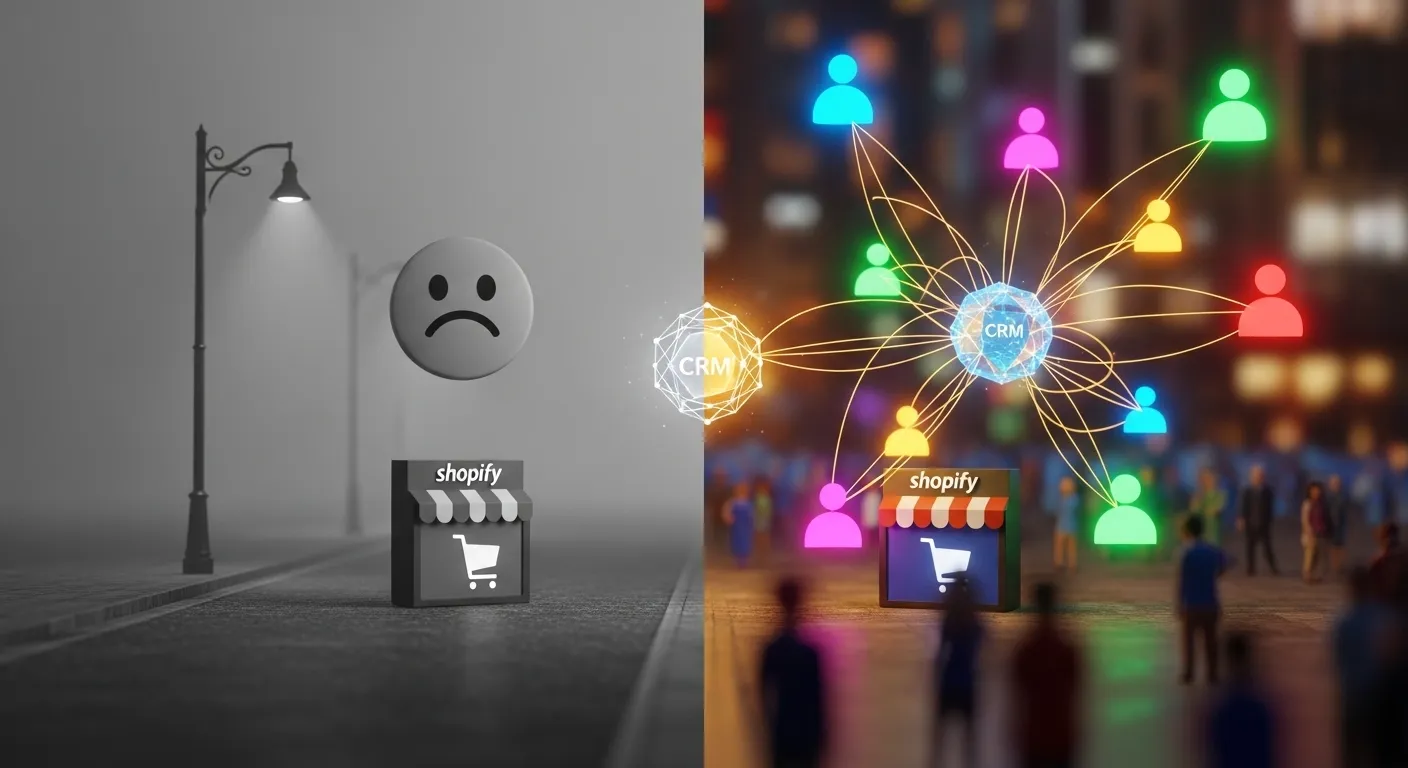
This is the “Ghost Town” problem of modern ecommerce: lots of visitors, little loyalty.
The solution isn’t just another app. It’s a strategy. It’s finding the best CRM software for Shopify in 2026. A powerful Customer Relationship Management (CRM) system transforms your Shopify admin panel from a simple order log into a revenue-generating command center. In this guide, we’ll cut through the noise, compare the top 7 platforms, and help you choose the perfect partner to turn one-time buyers into lifelong fans.
What is “Best CRM Software for Shopify” and Why Do You Need It?
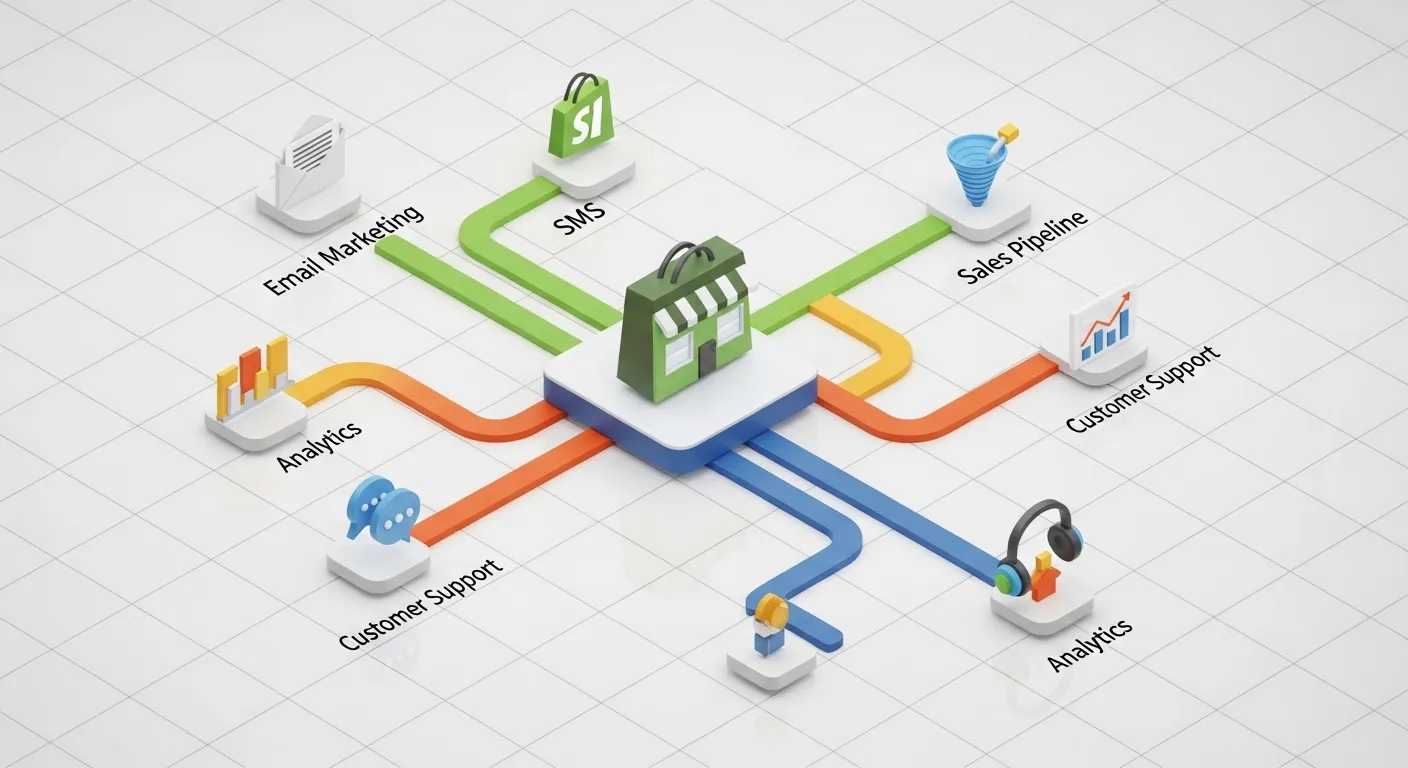
In simple terms, a CRM for Shopify is a tool that syncs your customer data—purchase history, email engagement, browsing behavior, into one centralized hub. But in 2026, it’s so much more than a digital Rolodex.
Think of it as the brain behind your store. While Shopify tracks the transaction, a CRM tracks the human. It remembers that Sarah bought a winter coat in November, so in January, it can automatically send her care instructions and a discount on a matching scarf. It knows that “TechGuru99” has abandoned his cart three times with high-value items, flagging him as a high-intent lead for your sales team.
Why it matters in 2026:
With third-party cookies crumbling, first-party data is the new gold. A CRM is your mine, your refinery, and your vault. It allows you to build deep, personalized relationships based on data you own, ensuring your marketing dollars are spent on retention, which is far more profitable than constantly fighting for new customers in an increasingly crowded and expensive ad space.
Why Your Shopify Store Can’t Scale Without a Dedicated CRM

You might be thinking, “Shopify’s built-in tools are fine for now.” But if your goal is to scale past the $100k or $500k mark, native tools will hold you back.
-
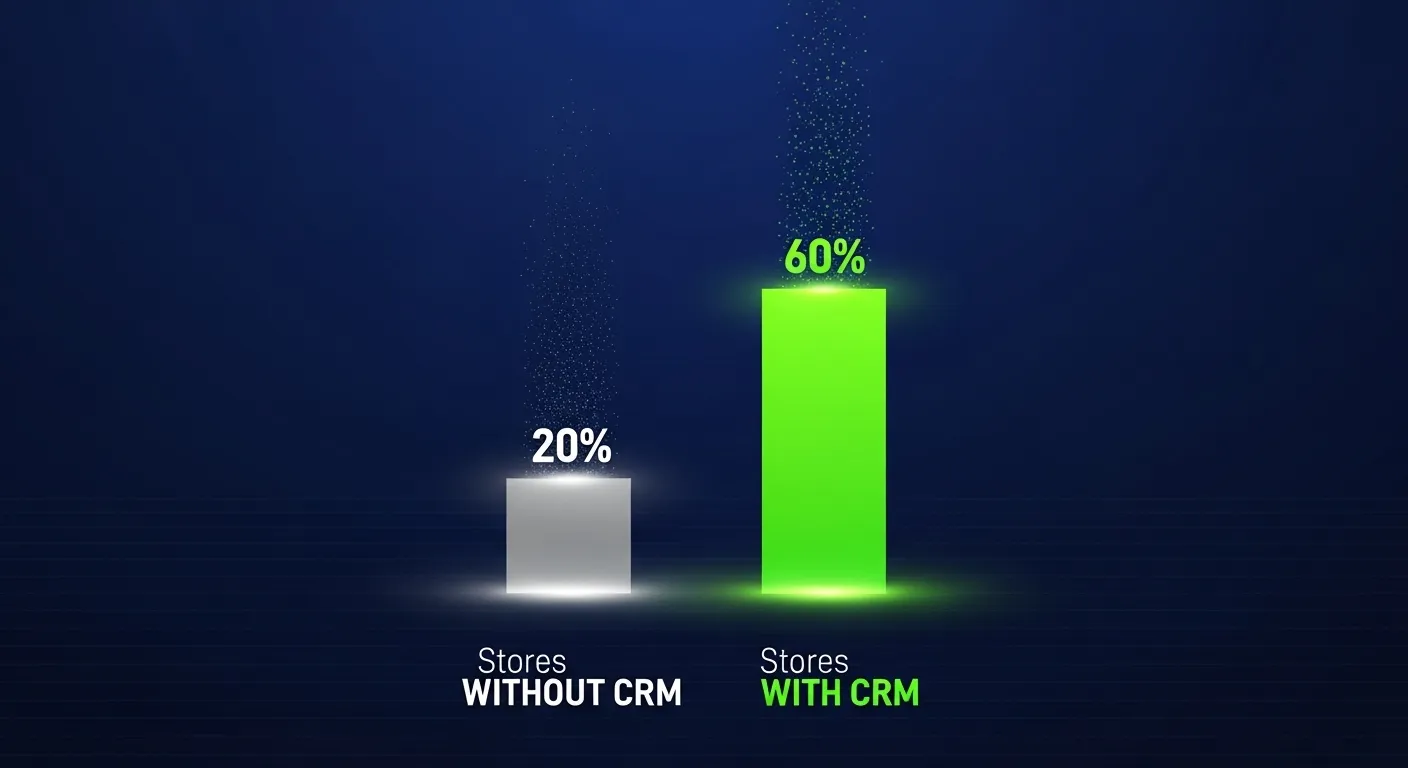
The Cost of Acquisition: It’s a well-worn statistic, but it bears repeating: acquiring a new customer is 5 to 7 times more expensive than retaining an existing one. A CRM directly attacks this by maximizing the value of every customer you’ve already paid to acquire.
-
The Power of Repeat Buyers: According to recent ecommerce benchmarks, repeat customers spend 67% more than new ones. Yet, most stores focus 80% of their energy on acquisition. A CRM automates the retention cycle.
-
Solving Shopify-Specific Pain Points:
-
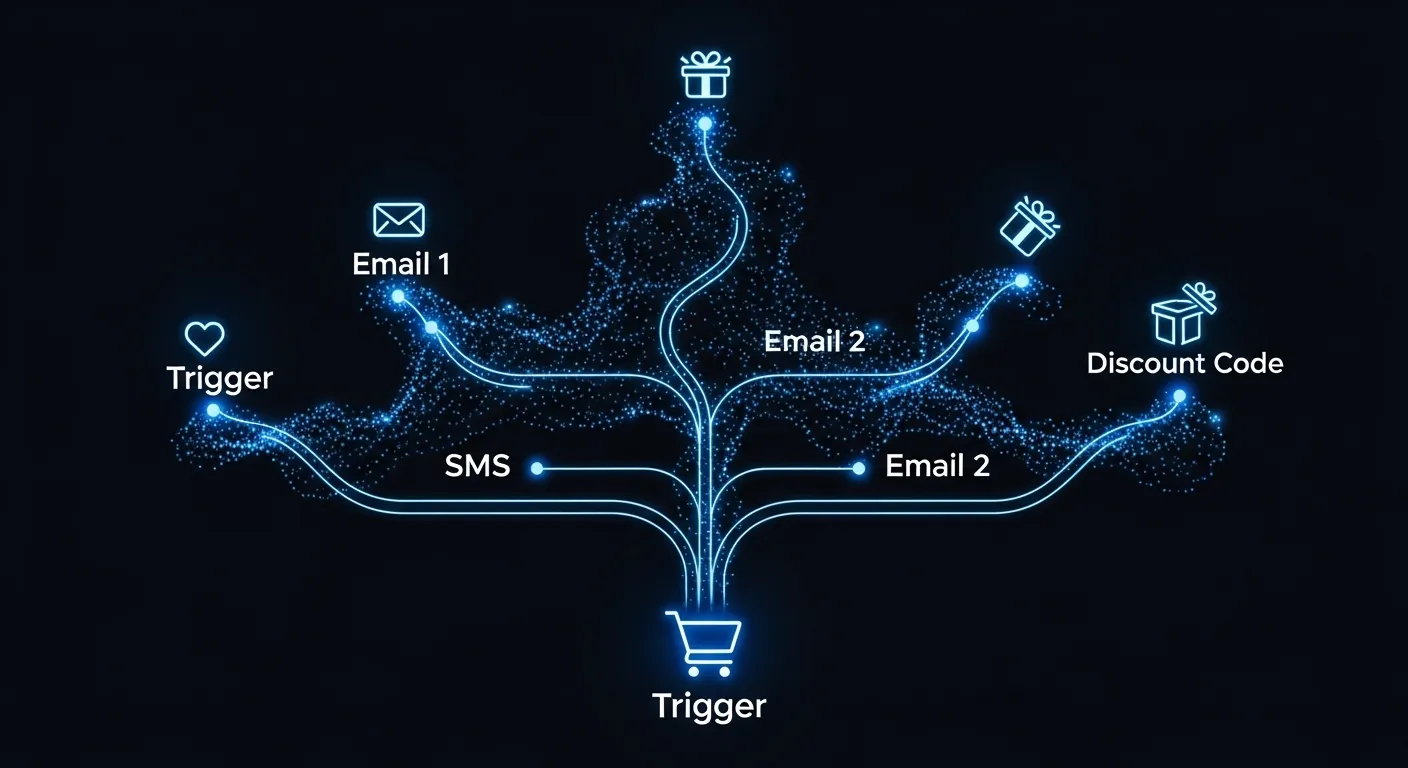
Abandoned Cart Recovery: Go beyond the single email. A CRM sequences a 3-5 step omnichannel recovery (email + SMS) based on user behavior.
-
Post-Purchase Personalization: “Thank you” is boring. A CRM triggers “How-to” guides, complementary product recommendations, and review requests automatically.
-
VIP Segmentation: Stop treating your best customers like everyone else. A CRM lets you tag “High LTV” customers and send them exclusive early access or VIP perks.
-
The Top 7 Best CRM Software for Shopify Solutions for 2026: In-Depth Review
We’ve tested, integrated, and optimized dozens of CRMs for our clients at XCONS Solutions. Here are our top picks for 2026.
1. HubSpot CRM: Best for Native Shopify Integration & Scalability
HubSpot isn’t just a CRM; it’s a full-fledged customer platform. Its strength lies in its ability to grow with you, from a free startup to an enterprise powerhouse.
-
Key Features & Integrations:
-
Shopify Sync: Syncs products, customers, and order history seamlessly. See exactly what a customer bought in their HubSpot timeline.
-
Marketing Hub Integration: Build sophisticated email campaigns based on purchase behavior, like “Customers who bought X, also viewed Y.”
-
Powerful Reporting: Create custom dashboards to track customer LTV, repeat purchase rate, and revenue by cohort directly from Shopify data.
-
Free Tier: An incredibly robust free version that’s perfect for startups.
-
-
Pricing Overview: Free plan available. Paid Marketing Hub starts at ~$20/month (billed annually), with higher tiers for advanced automation.
-
Pros and Cons:
-
Pros: Intuitive interface, deep integration, massive app ecosystem, scales infinitely.
-
Cons: Can get expensive as you add users/hubs. The free version lacks some advanced automation triggers.
-
Best For: Stores of all sizes, especially those planning for aggressive growth and needing a unified sales & marketing platform.
2. Klaviyo: Best for Email & SMS Marketing Automation
While technically a marketing automation platform, Klaviyo functions as a marketing-centric CRM for thousands of high-revenue Shopify stores. Its data aggregation is second to none.
-
Key Features & Integrations:
-
Hyper-Segmentation: Slice and dice your audience based on what they’ve viewed, bought, or abandoned. Create segments like “Bought red sneakers in the last 30 days but not blue ones.”
-
Predictive Analytics: Klaviyo’s AI predicts who is most likely to churn or make a future purchase, allowing for proactive engagement.
-
Shopify Deep Sync: Tracks real-time browsing behavior and on-site events for trigger-based flows.
-
SMS Built-In: Native SMS marketing channels that integrate perfectly with email flows.
-
-
Pricing Overview: Starts free up to a certain number of contacts, then scales based on contact count. It’s a popular “free Shopify CRM” for growing lists.
-
Pros and Cons:
-
Pros: Unmatched email/SMS automation capabilities, brilliant segmentation, fantastic deliverability.
-
Cons: Less of a traditional “pipeline” CRM. Not ideal for B2B or high-ticket sales that require a sales rep.
-
Best For: DTC brands and ecommerce stores where email marketing is the primary revenue driver.
3. Agile CRM: Best for Startups & Small Budgets
Agile CRM punches above its weight class. It’s a feature-packed platform designed for small teams that need sales, marketing, and service tools without the enterprise price tag.
-
Key Features & Integrations:
-
Helpdesk & Telephony: Includes service features often missing in entry-level CRMs.
-
Proven Shopify Connector: Use third-party tools like Zapier or Pabbly to connect Agile to your Shopify store, syncing contacts and purchases for segmentation.
-
Gamification: Uses game mechanics to motivate your sales team to close more deals (great for B2B hybrid stores).
-
-
Pricing Overview: Offers a generous free plan for up to 10 users. Paid plans start very low, around $8.99/user/month.
-
Pros and Cons:
-
Pros: Incredible value for money, all-in-one suite, good for mixed B2B/B2C stores.
-
Cons: Interface feels less polished than HubSpot or Salesforce. Requires third-party tools for native Shopify sync.
-
Best For: Bootstrapped startups, small teams, and stores with a B2B component needing a service desk.
4. Salesforce Sales Cloud: Best for Enterprise & High-Volume Stores
If you’re a massive brand with complex sales processes, Salesforce is the undisputed king. It’s the most powerful and customizable CRM on the market.
-
Key Features & Integrations:
-
360-Degree View: Connects every department—sales, service, marketing, commerce—on one platform.
-
Einstein AI: Salesforce’s built-in AI provides predictive scoring, automated data capture, and next-best-action recommendations based on Shopify browsing history.
-
Customization: You can build anything in Salesforce. It’s a platform, not just a tool.
-
-
Pricing Overview: Premium pricing. Starts around $25/user/month for the least expensive version, but true power requires the Enterprise or Unlimited editions ($150+/user/month).
-
Pros and Cons:
-
Pros: Unrivaled power and customization, industry standard for large enterprises, best-in-class AI.
-
Cons: Requires dedicated administrators, steep learning curve, expensive.
-
Best For: Enterprise-level brands, 7-figure+ stores with complex operations and dedicated IT teams.
5. Pipedrive: Best for Visual Sales Pipeline Management
Pipedrive is built by salespeople, for salespeople. If your Shopify store has a high-ticket, consultative sales process (e.g., furniture, custom goods, B2B wholesale), this is your tool.
-
Key Features & Integrations:
-
Visual Pipeline: Its drag-and-drop interface is the cleanest way to move leads from “New Inquiry” to “Contract Signed.”
-
LeadBooster: Includes tools like web forms, live chat, and a prospector to generate leads directly within the app.
-
Shopify Integration: Via Zapier or native apps, you can create deals when a high-value item is added to a cart, prompting a salesperson to reach out.
-
-
Pricing Overview: Starts around $14.90/user/month (billed annually). Very reasonable for the functionality.
-
Pros and Cons:
-
Pros: Super easy to use, focused on the sales process, great mobile app.
-
Cons: Marketing automation features are not as strong as HubSpot or Klaviyo.
-
Best For: Stores with high-ticket items, B2B/hybrid stores, and teams who live in their pipeline.
6. Freshsales (by Freshworks): Best for AI-Powered Deal Insights
Freshsales is a modern, user-friendly CRM that packs a serious AI punch with its built-in tool, Freddy AI. It’s a fantastic alternative to HubSpot.
-
Key Features & Integrations:
-
Freddy AI: Provides lead scoring, deal insights (predicting win/loss probability), and next-best actions.
-
Built-in Phone & Email: Includes a powerful built-in phone system and email tracking, perfect for outreach.
-
Shopify Integration: Use native connectors or tools like PieSync to keep customer data in sync.
-
-
Pricing Overview: Free plan available. Paid plans start around $15/user/month, offering great value.
-
Pros and Cons:
-
Pros: Modern UI, powerful built-in AI, excellent customer support.
-
Cons: App marketplace is smaller than HubSpot’s or Salesforce’s.
-
Best For: Growth-stage stores looking for a modern, AI-driven CRM without the complexity of Salesforce.
7. ActiveCampaign: Best for Advanced Automation & Customer Experience
ActiveCampaign blurs the line between CRM and email marketing. Its automation builder is a visual masterpiece, allowing you to map out incredibly complex, personalized customer journeys.
-
Key Features & Integrations:
-
Site & Event Tracking: Track what your Shopify customers do on your site and trigger automations based on specific products viewed.
-
Machine Learning: Sends send-time optimization and predictive content to maximize engagement.
-
Deep Shopify Sync: Syncs purchase data to build dynamic segments like “Product affinity.”
-
-
Pricing Overview: Starts around $19/month for the Lite plan, but the CRM features require a plus plan (~$49/month).
-
Pros and Cons:
-
Pros: Unbeatable automation builder, strong email deliverability, great for nurturing complex sequences.
-
Cons: The CRM features are less intuitive than the marketing side; interface can feel busy.
-
Best For: Stores focused on creating deep, automated customer journeys and nurturing leads over a long period.
Best CRM Software for Shopify Comparison: Which One is Right for You?
| CRM Software | Best For | Starting Price (approx.) | Key Differentiator | Ease of Use |
|---|---|---|---|---|
| HubSpot | Scaling businesses & native integration | Free – $20/mo | All-in-one platform, free tier | High |
| Klaviyo | Email/SMS revenue focus | Free – $20/mo | Hyper-segmentation & ecomm data | High |
| Agile CRM | Startups & small budgets | Free – $9/mo | Value for money, service suite | Medium |
| Salesforce | Enterprise & complex operations | $25 – $150+/mo | Unmatched power & customization | Low |
| Pipedrive | High-ticket & B2B sales | $15/mo | Visual deal pipeline | High |
| Freshsales | AI-powered insights | Free – $15/mo | Freddy AI & modern interface | High |
| ActiveCampaign | Complex customer journeys | $19 – $49/mo | Advanced automation builder | Medium |
How to Decide:
-
If your primary goal is email/SMS revenue: Start with Klaviyo.
-
If you need an all-in-one platform that scales forever: Go with HubSpot.
-
If you have a complex sales team closing big deals: Choose Pipedrive or Salesforce.
-
If you are on a shoestring budget but need power: Look at Agile CRM or Freshsales.
How to Choose the Best CRM for Your Specific Shopify Needs?
Choosing software is an investment. Don’t just pick the most popular name. Use this step-by-step checklist:
-
Audit Your Current Tech Stack: What tools are you already using? Does the CRM integrate natively with your email provider, review app, or loyalty program?
-
Define Your “North Star” Metric: Are you trying to increase repeat purchase rate, average order value (AOV), or customer lifetime value (LTV)? Choose a CRM strong in that area (e.g., Klaviyo for repeat rate).
-
Consider Technical Skill: Are you a solo founder or do you have a team? HubSpot is user-friendly; Salesforce needs a dedicated admin.
-
Test the Workflow: Sign up for free trials. Try to build a simple automation. Does it feel intuitive? If you hate using it, you won’t.
-
Check Shopify Flow Compatibility: For advanced users, ensure the CRM works with Shopify Flow to automate tedious tasks like tagging customers based on order value.
How XCONS Solutions Ltd Can Help You Maximize Your Shopify CRM?

At XCONS Solutions, we don’t just install software and walk away. We believe your CRM is the central nervous system of your entire digital marketing strategy.
Our Unique Methodology:
We connect the dots between your technical SEO, your content, and your customer data. We optimize your entire customer data flow to ensure that insights from your CRM feed back into your SEO and marketing strategies.
-
CRM + SEO Integration: We use customer search data from your CRM to identify high-intent keywords we may have missed, fueling your next content cluster.
-
AEO (Answer Engine Optimization): We structure your customer support data within the CRM to train AI models, ensuring your brand answers questions on Google, Siri, and Alexa.
-
Tech Stack Optimization: We don’t just set up HubSpot or Klaviyo; we build complex automation sequences that save your team hours of manual work, from post-purchase upselling to win-back campaigns for dormant customers.
We bridge the gap between the technical backend and the front-end customer experience.
Real Results: A Case Study in Shopify CRM Integration
-
Client: Anonymous premium pet food brand (Shopify Plus store)
-
Challenge: High churn rate after the initial subscription box. They were treating new subscribers the same as 2-year veterans, leading to disengagement.
-
Our Strategy: We implemented HubSpot and built a multi-layered automated flow:
-
Onboarding Sequence: Personalized emails based on pet type (dog/cat) and breed, educating the owner on nutrition.
-
Usage-Based Re-Engagement: Integrated with their inventory data to trigger a “Running Low” email before the next billing cycle, reducing cancellations.
-
VIP Segmentation: Tagged customers with >$500 LTV and invited them to a private “Pet Parent” Facebook group and offered exclusive event access.
-
-
Results: Within 6 months, we drove a 30% increase in repeat purchases and a 20% boost in email revenue, simply by treating customers like individuals, not order numbers.
Frequently Asked Questions About Best CRM Software for Shopify
What is the best free CRM for Shopify?
HubSpot offers the most robust free CRM, syncing contact data and offering basic marketing tools. Agile CRM also has a generous free plan. For marketing-focused stores, Klaviyo is free up to a certain contact threshold. Remember, “free” often limits automation complexity.
How much does a Shopify CRM typically cost?
You can start for free. Paid plans for small to medium stores typically range from $15 to $50 per month. Enterprise solutions like Salesforce can cost hundreds per user, per month. Factor in your time savings and increased revenue—a good CRM pays for itself quickly.
What’s the difference between a CRM and Shopify’s native customer tools?
Shopify’s native tools are transactional. They tell you what someone bought and when. A CRM is relational. It tells you why they might buy again, helps you predict their next move, and automates the communication to make it happen. It adds the “human” layer to the data.
How do I migrate my customer data to a new CRM?
Most reputable CRMs offer import tools (CSV files) or dedicated migration services. Start by cleaning your existing list in Shopify—remove duplicates and unsubscribed contacts. Map your fields carefully (e.g., “Total Spent” in Shopify to “LTV” in your new CRM) to ensure a clean transfer.
Ready to Transform Your Customer Relationships?
Choosing the best CRM software for Shopify in 2026 is the single most important investment you can make in your store’s future. It’s the engine that powers loyalty, the key to unlocking the full value of your first-party data, and the tool that frees you from the hamster wheel of constant customer acquisition.
At XCONS Solutions Ltd, we don’t just talk about this stuff—we build it, optimize it, and win with it. We have the experience to help you navigate these choices and implement a system that drives real, measurable growth.