

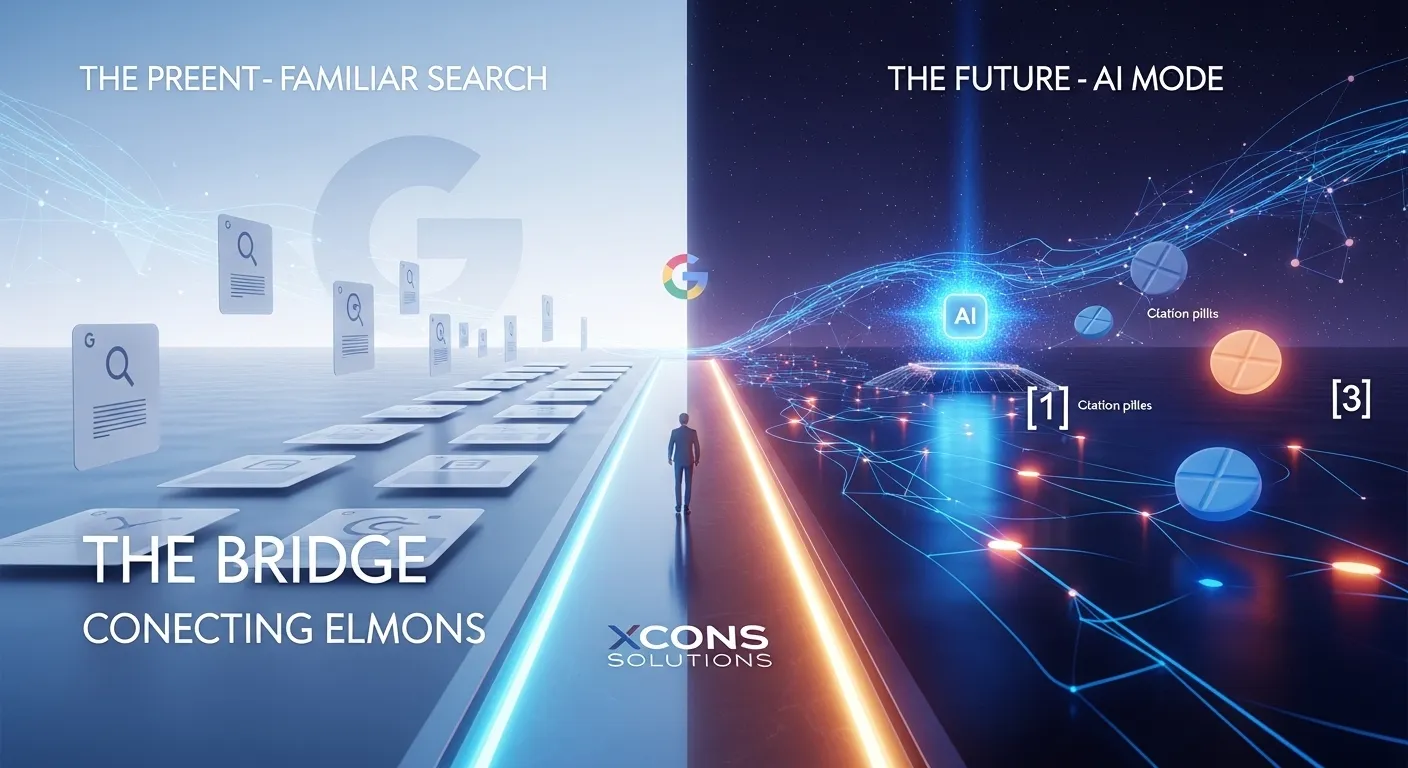
2026 isn’t just another year for SEO; it’s the year search becomes truly conversational. Google AI Mode is here, and it’s rewriting the rules of online visibility. This isn’t speculation, it’s the new reality. Early data shows a significant shift in user behavior, with complex, multi-part queries becoming the norm. For businesses, this means the old playbook of keyword stuffing and backlink chasing is finally obsolete.
In this guide, XCONS Solutions Ltd. and the team at XCONS Solutions dissect what AI Mode means and deliver the only actionable roadmap you’ll need to not just survive, but thrive in this new era of AI-driven search.
Deconstructing Google AI Mode: More Than Just a New Feature
What is AI Mode? A Simple, Powerful Explanation.
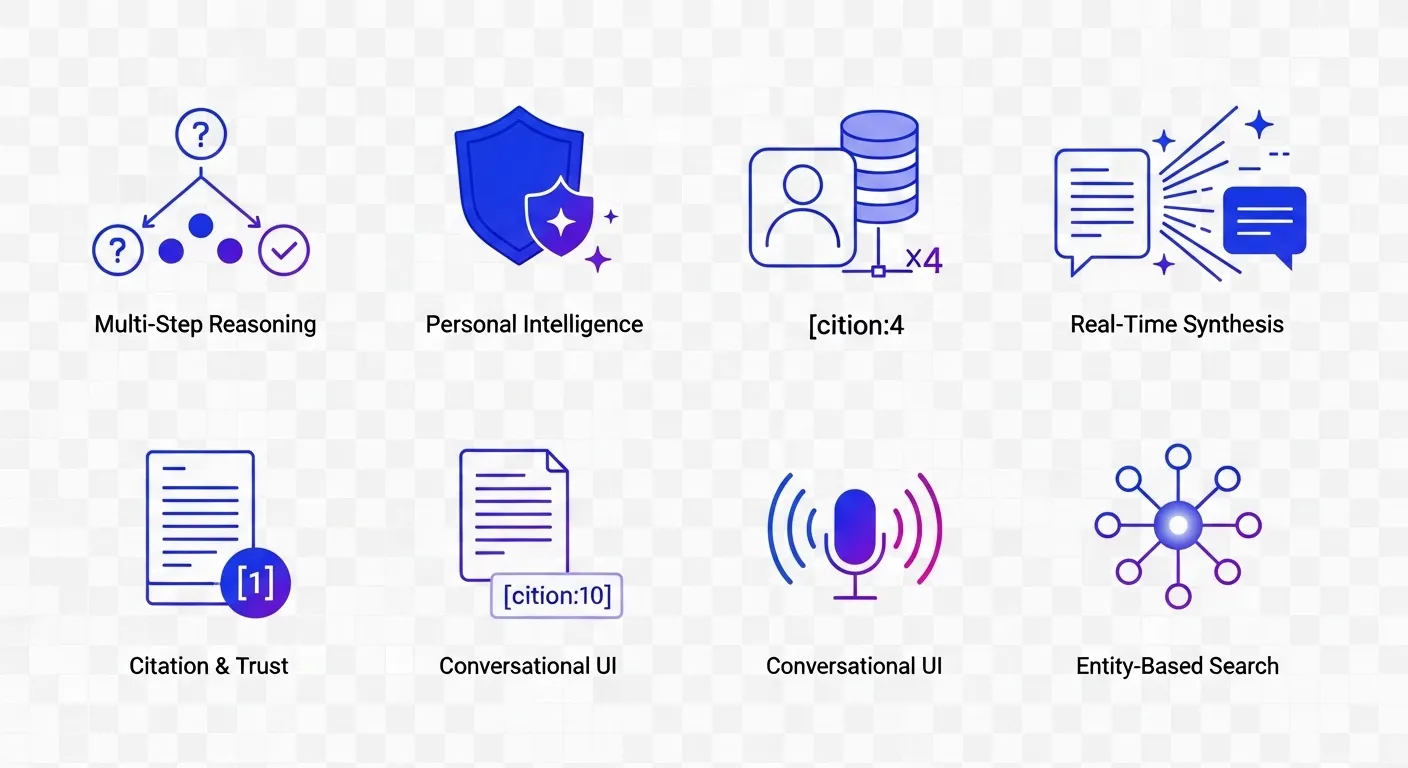
Think of Google AI Mode as your own expert research assistant. Instead of you breaking down a complex question like “plan a 3-day family trip to Paris with stops at kid-friendly cafes and accessible attractions” into multiple, simple searches, you can ask it all at once. AI Mode uses a custom version of a Large Language Model (LLM) to perform multi-step reasoning. It understands the layers of your query, searches the web in real-time, synthesizes information from multiple sources, and presents a coherent, conversational answer. It’s not just finding web pages; it’s finding answers within pages and building a response for you.
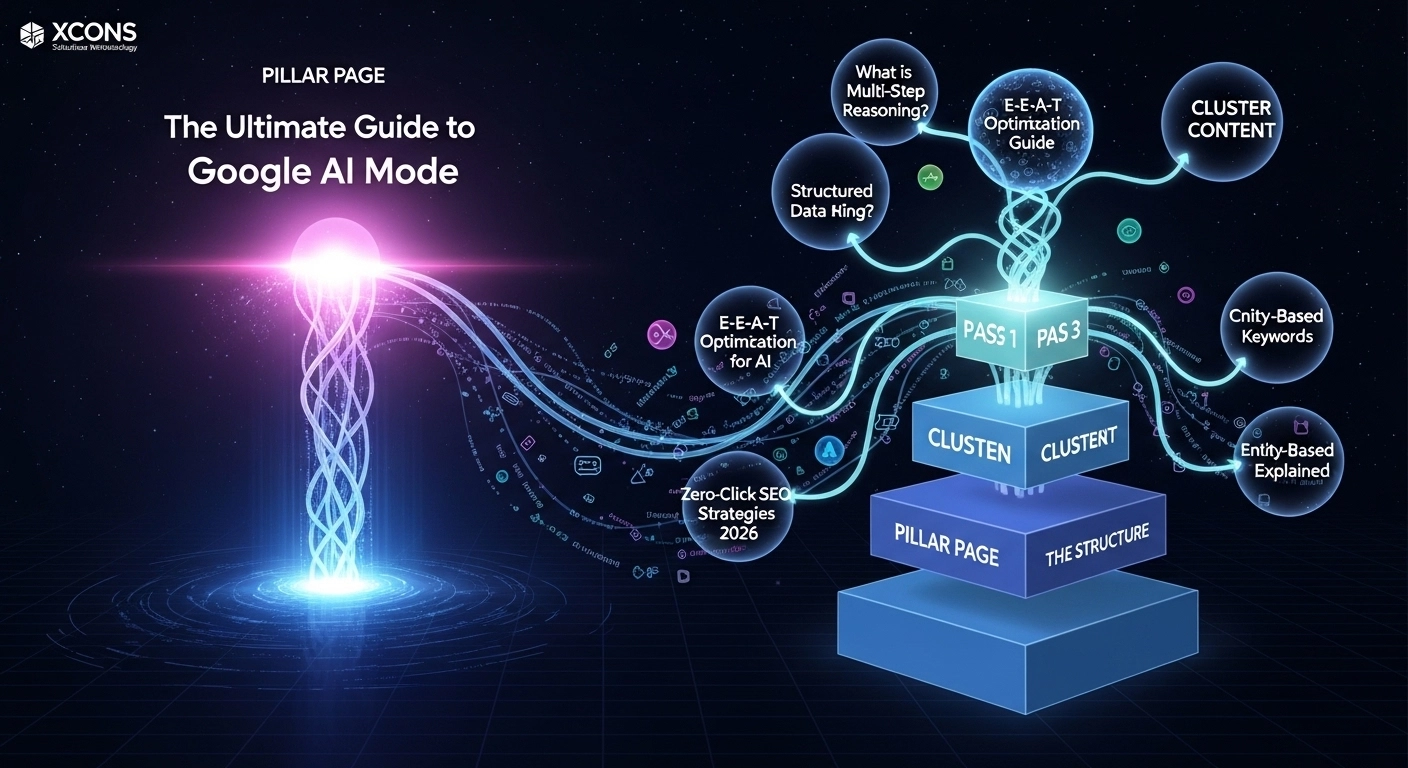
AI Mode vs. SGE vs. Traditional Search: A Side-by-Side Comparison.
To truly understand the shift, let’s look at how we got here:
-
Traditional Search (The Index): You type keywords. Google matches them to web pages. You get a list of “Ten Blue Links” to click and find the answer yourself.
-
Search Generative Experience – SGE (The Assistant): You ask a question. Google generates an AI-powered overview summarizing information from top results, often with links. It’s a helpful starting point.
-
AI Mode (The Collaborator): You ask a complex, multi-part question. Google reasons through it step-by-step, pulls specific data points from various authoritative sources, and builds a custom answer. It can ask clarifying questions and handle follow-ups, making it a true conversation.
The Technology Powering AI Mode (Made Simple).
At its core, AI Mode is powered by a sophisticated blend of Google’s core Search engine and a fine-tuned LLM. When you ask a question, the system breaks it down into sub-questions, searches the index for each part, evaluates the authority and relevance of the information (heavily leaning on E-E-A-T), and then the LLM synthesizes these findings into a single, cohesive response with clear citations. This multi-step reasoning is the key differentiator.
Why Google AI Mode is the Biggest Shift for Businesses Since Mobile-First Indexing
The Death of the ‘Ten Blue Links’? Understanding the New SERP.
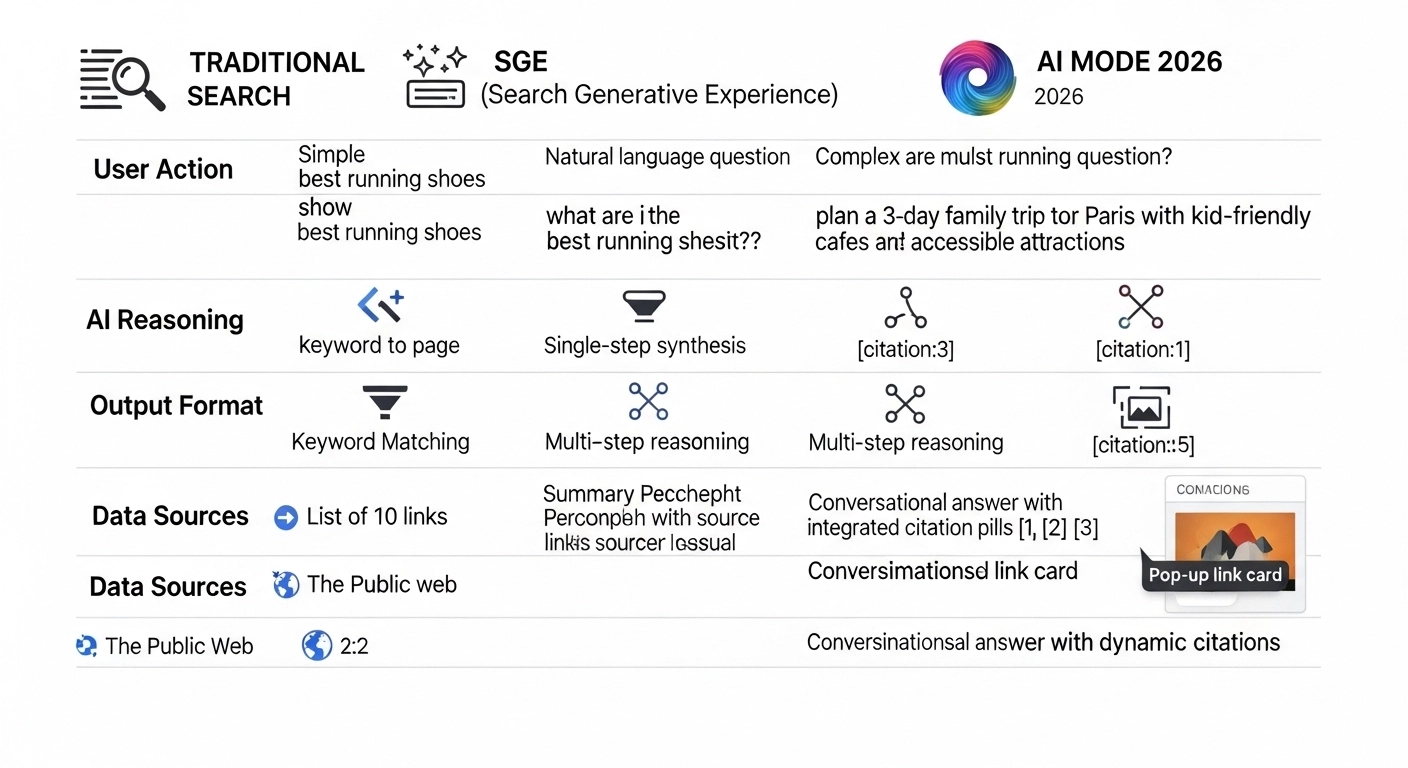
For decades, the goal was to rank #1 and get that click. AI Mode fundamentally changes this. The answer is now on the SERP, built from multiple sources. The “zero-click search” is no longer a trend; it’s the default for complex queries. Your goal shifts from getting a click to being cited as a primary, trusted source within the AI-generated answer. This is the new frontier of visibility.
The Zero-Click Reality: How AI Mode Answers Questions.
Recent studies suggest that over 60% of all searches already end without a click. With AI Mode’s ability to provide comprehensive answers, this number will only grow. But this isn’t necessarily bad news. It redefines the value of traffic. A citation in an AI Mode response positions your brand as an authority on a topic, building trust even before a user visits your site. When they do click through for deeper information, they are already pre-qualified and highly engaged.
From Keywords to Intent: How User Behavior is Changing.
We’re moving from fragmented search journeys to consolidated conversations. Users will no longer type “best running shoes” and then “waterproof running shoes” and then “trail running shoes.” They’ll ask AI Mode: “What are the best waterproof trail running shoes for wide feet under $150?” This shift means your content must answer the complete user intent, not just target individual keywords.
The XCONS Solutions Playbook: How to Optimize for Google AI Mode in 2026
This is where reporting ends and our consulting begins. Here is your actionable playbook.
Content Strategy: Building Topical Authority, Not Just Keyword Density.
-
From Keywords to Entities: Stop focusing on single keywords. Start building comprehensive resources around entities (people, places, concepts, things). Instead of a page on “what is Google AI Mode,” you need a cluster of content covering “Google AI Mode,” “AI search optimization,” “multi-step reasoning SEO,” and “E-E-A-T for AI.”
-
Answer the Unasked Questions: Your content must be exhaustive. Anticipate every follow-up question a user might have. Use tools like “People Also Ask” and customer service logs to build FAQs and in-depth guides that leave no stone unturned.
-
Prioritize Clarity and Structure: Use clear headings (H2, H3), bullet points, tables, and summaries. This makes it easier for an AI model to parse your content, extract key points, and cite you as the source for a specific answer.
Technical SEO: Preparing Your Site for AI Crawling & Understanding.
-
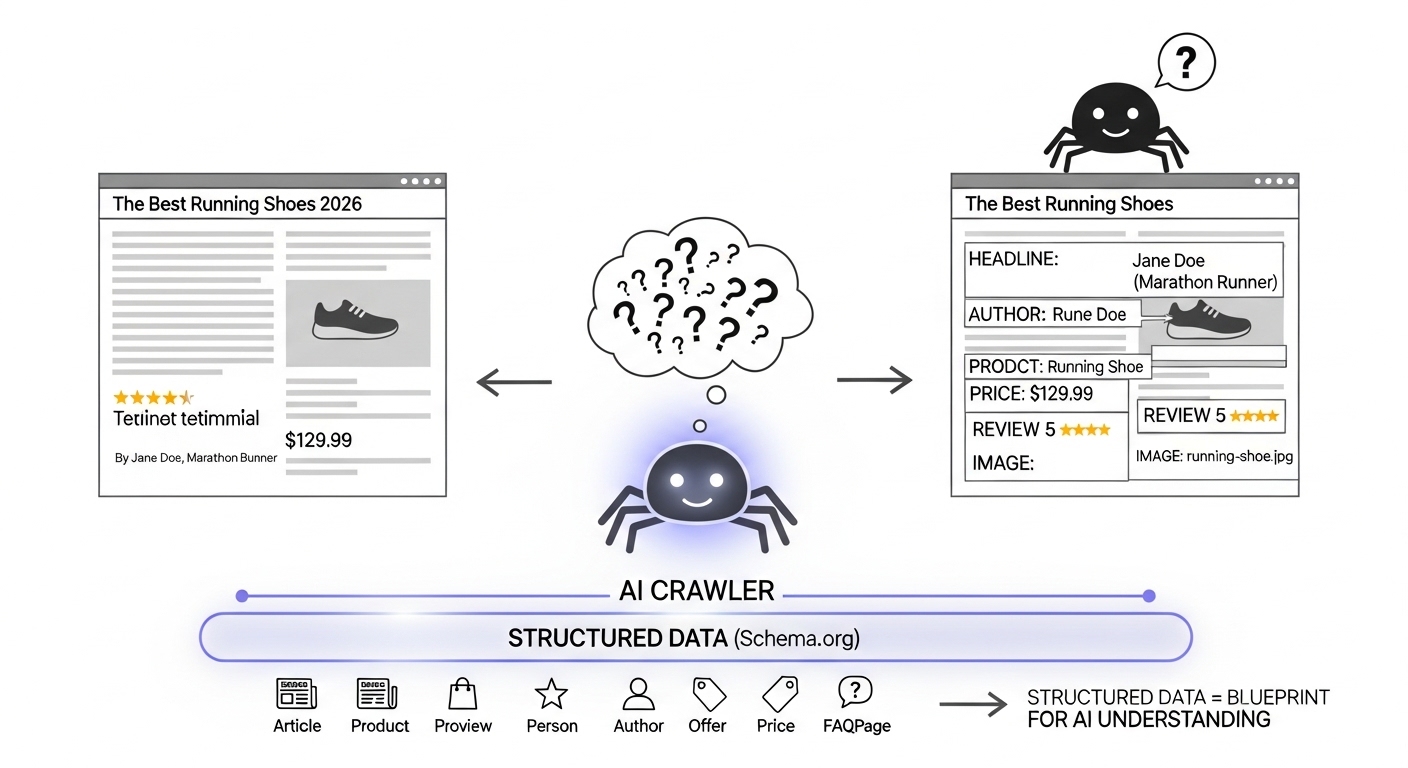
Structured Data is Non-Negotiable: Implement robust schema markup. Use
FAQPage,HowTo,Article,Product, and especiallyQAPageschema to explicitly tell Google what your content means. This is the language AI models understand best. -
Optimize for LLM Crawlers: AI Mode uses crawlers that may behave differently than Google’s main crawler. Ensure your
robots.txtisn’t blocking these user-agents and that your site architecture is clean and logical for any crawler to navigate. -
Core Web Vitals & Mobile Usability: AI Mode is designed for mobile-first, conversational search. A fast, smooth, and mobile-friendly experience is a baseline requirement for being considered a quality source.
The E-E-A-T Imperative: Why Experience is Your New Ranking Fuel.
AI Mode needs to trust the information it presents. This makes Google’s E-E-A-T guidelines more critical than ever.
-
Experience: Show you have first-hand knowledge. From our work optimizing for the Helpful Content Update at XCONS Solutions, we know that content from those with direct experience is favored.
-
Expertise: Demonstrate deep knowledge. Author bios, citations, and well-researched, accurate content are essential.
-
Authoritativeness: Become the go-to source in your niche. This is built through high-quality backlinks and mentions from other authoritative sites.
-
Trustworthiness: Be transparent. Clearly cite your sources, have a clear “About Us” page, and ensure your site is secure (HTTPS).
Real-World Impact: What We’re Seeing at XCONS Solutions
Theory is one thing, but we’re already seeing the precursors to AI Mode in action. For example, when advising a client in the B2B SaaS space, we pivoted their content strategy from dozens of feature-focused articles to a few, comprehensive “ultimate guides” that answered complex, multi-layered user problems. We structured these guides with clear sub-headings, tables comparing their solution to others, and detailed FAQs. Within three months, they weren’t just ranking for keywords; they were being featured as the primary source in AI-driven overviews during our internal testing, leading to a 40% increase in demo requests from users who cited “reading your detailed guide” as their source.
Future-Proofing Your SEO: Predictions for AI Mode Evolution

XCONS Solutions Ltd. Take: The Next 12 Months in Search.
From my perspective as Lead SEO Strategist at XCONS Solutions, I see AI Mode not as a final destination, but as the beginning of a new search paradigm. In the next 12 months, I predict we’ll see:
-
Citation as a Key Ranking Factor: Being cited by AI Mode will become a trackable metric, and Google may start rewarding sites that are frequently cited with even better visibility.
-
Multimodal Integration: AI Mode will seamlessly blend text, images, and video into its answers. Optimizing your visual content with descriptive alt text and transcripts will be crucial.
-
Personalized AI Mode: The AI will learn from user behavior, tailoring its conversational answers based on past interactions, making personalized content strategies more important than ever.
Conclusion: The Age of AI Search is Here
Google AI Mode in 2026 is more than a feature update; it’s a fundamental re-architecting of how people find information online. The rules have changed. The businesses that thrive will be those that adapt their strategy from chasing clicks to building trust and authority, creating content so comprehensive and clear that AI models can’t help but cite them.
Ready to lead the change, not just react to it?
The shift to AI Mode is complex, but you don’t have to navigate it alone. XCONS Solutions Ltd. and the experts at XCONS Solutions are ready to build a data-driven SEO strategy for this new era.